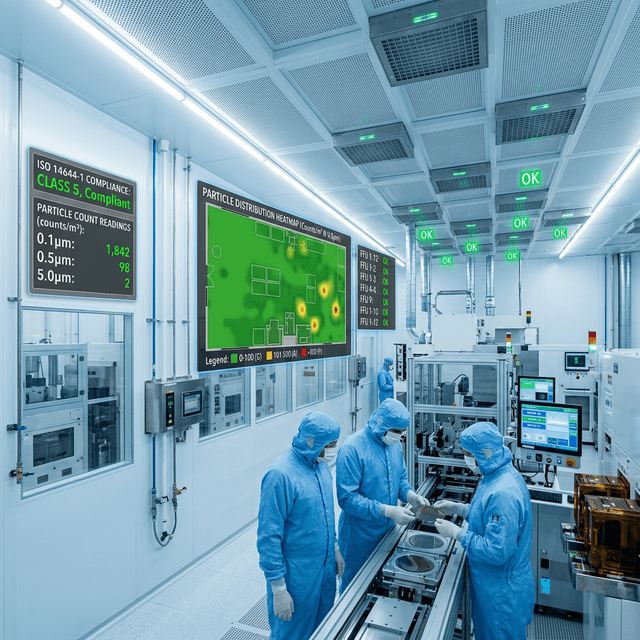
Cleanroom environmental drift
Identify which zones are drifting, which facility systems may be contributing, and which response should be handled first.
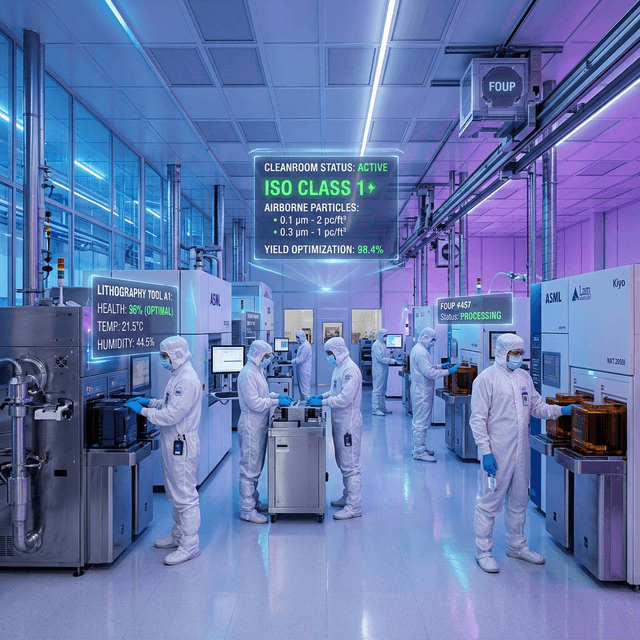
AI for semiconductor facility operations
AI-assisted facility operations for semiconductor sites, connecting cleanroom signals, utility equipment, alarms, maintenance context, and Inspector work orders.
Core building blocks that define how this page delivers operational value.
Analyze particles, temperature, humidity, pressure, and zone-level context together so facility teams can respond before small drifts escalate.
Connect HVAC, chilled water, CDA, vacuum, exhaust, and related facility signals to understand upstream causes and downstream impact.
Use alarm history, sensor trends, maintenance records, and asset context to rank the facility assets that need attention first.
Move from AI-assisted findings to work orders, dispatch, field execution, documentation, and verification through Inspector.
Practical applications and proven success scenarios across industries.
Identify which zones are drifting, which facility systems may be contributing, and which response should be handled first.
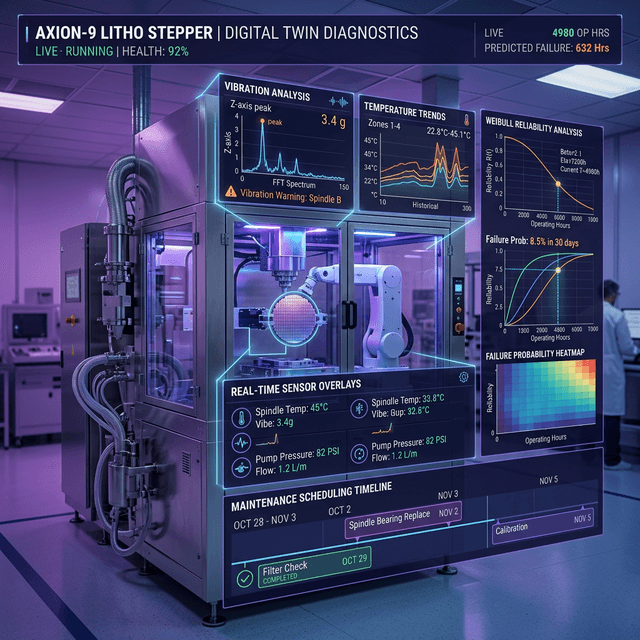
Correlate alarms, sensor trends, and maintenance history across facility-side systems so teams can focus on the most urgent operational risks.
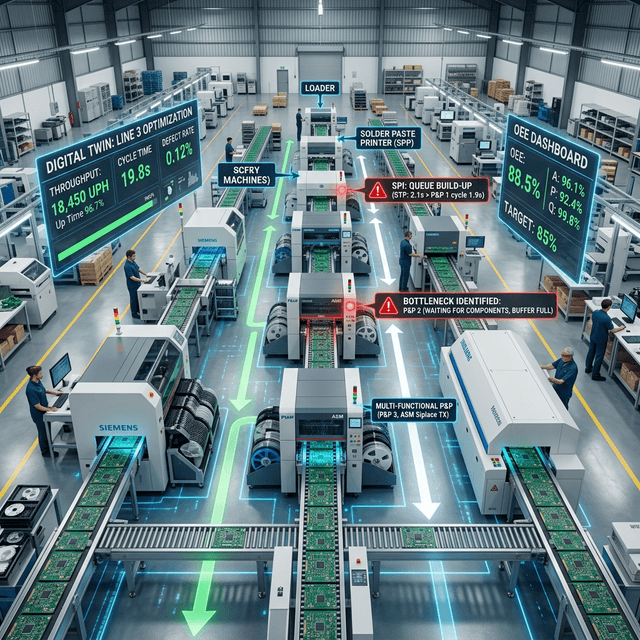
Route validated anomalies into Inspector work orders with asset context, assigned tasks, field records, and closure evidence.
Semiconductor facilities produce large amounts of operational signal: cleanroom conditions, utility systems, alarms, equipment status, maintenance records, and field work. The challenge is not collecting more dashboards. The challenge is turning these signals into timely, traceable action.
Semiconductor Facility AI combines Data Fusion Services, FactVerse, FactVerse AI Agent, and Inspector to help facility teams detect drift, prioritize maintenance, and close the loop from finding to verified work.
| Traditional facility monitoring | Semiconductor Facility AI |
|---|---|
| Signals shown in separate systems | Facility data connected to one operating context |
| Alarms reviewed after escalation | Earlier risk visibility through trend and anomaly analysis |
| Maintenance priorities decided manually | Asset context and maintenance history help rank work |
| Work handoff happens outside the system | Inspector connects findings to work orders and verification |
| Lessons stay in reports | Closure records become reusable operational context |
Data Fusion Services can connect BMS, SCADA, IoT sensors, facility equipment telemetry, environmental monitoring, CMMS, EAM, and other operational systems through standard interfaces and APIs.
No. The page is focused on facility operations, utility systems, predictive maintenance, alarm response, and Inspector execution workflows.
Because facility recommendations should be reviewed with spatial context, asset relationships, upstream utility behavior, and maintenance history before work is dispatched.