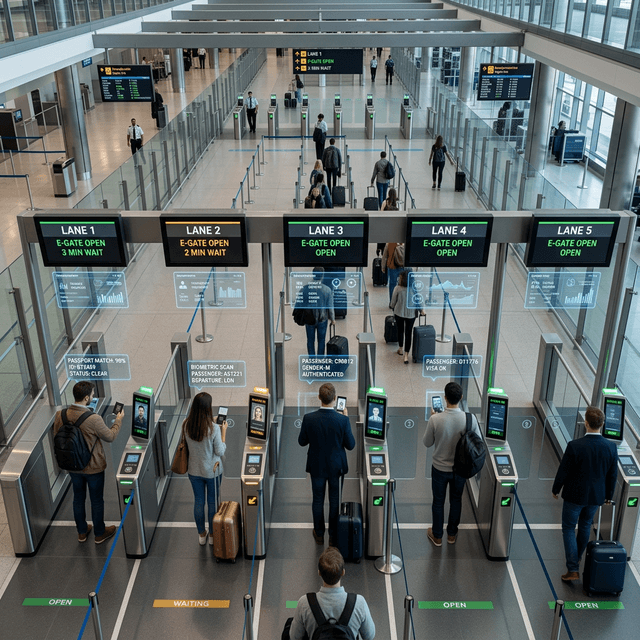
Checkpoint throughput planning
Anticipate passenger or vehicle surges, rebalance lane strategy, and support operations teams before queues become a visible service issue.
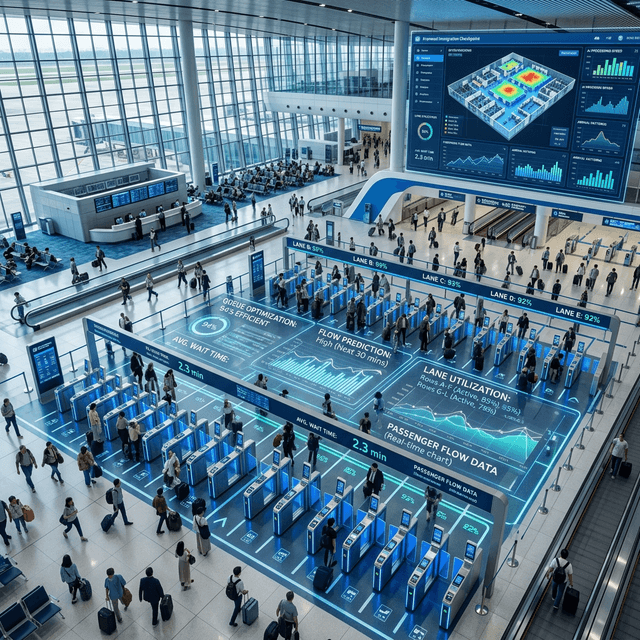
AI Operations for Traffic Flow and Throughput
Run checkpoint, port, and transport-hub operations with AI-native flow prediction, lane planning, incident triage, and cross-system coordination.
Core building blocks that define how this page delivers operational value.
Forecast arrivals, queue pressure, and operating peaks early enough to adjust lanes, staffing, and downstream coordination before congestion builds.
Evaluate lane allocation, checkpoint readiness, and staffing options against throughput, service level, and operational constraints.
Connect HVAC, power, security, gate status, queue signals, and equipment health so teams can understand the real cause of disruption faster.
Use asset condition and demand context to schedule interventions during low-impact windows while preserving lane availability during peaks.
Practical applications and proven success scenarios across industries.
Anticipate passenger or vehicle surges, rebalance lane strategy, and support operations teams before queues become a visible service issue.
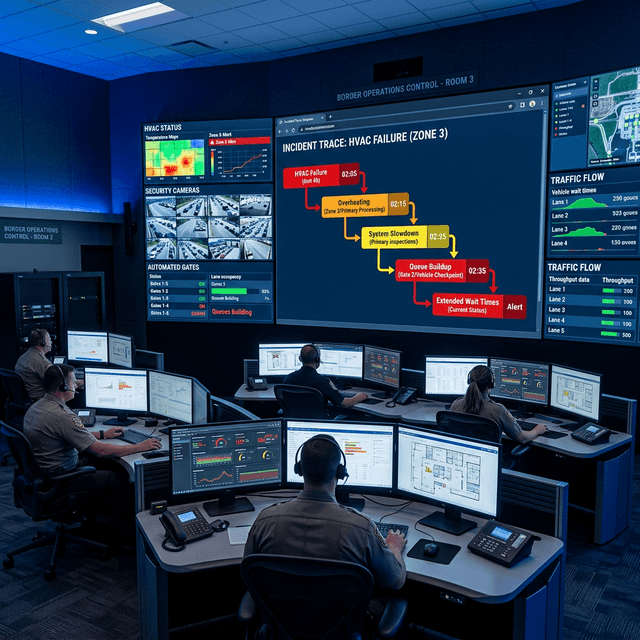
Trace disruptions across equipment, facilities, and operational systems so teams can coordinate response instead of chasing isolated alarms.
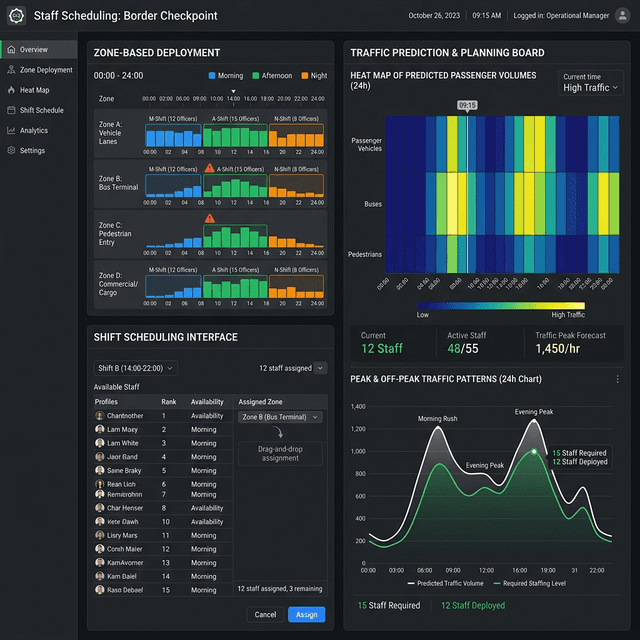
Use demand forecasts and lane context to move maintenance into lower-impact periods without sacrificing service readiness.
Checkpoints, ports, and transport hubs do not break down because of one queue alone. They break down when traffic demand, lane availability, equipment readiness, and facility conditions stop moving together. Traffic Flow Management gives operators a shared operating layer to predict flow, triage disruption, and coordinate action before service breaks down.
| Traditional checkpoint operations | Traffic Flow Management |
|---|---|
| Queue monitoring after buildup | Earlier flow prediction and surge anticipation |
| Manual lane balancing | Decision support with operating context |
| Siloed alarms across systems | Cross-system incident triage |
| Calendar-based maintenance windows | Maintenance aligned to real traffic demand |
| Separate review and reporting workflows | One operating record across analysis and execution |
No. Traffic Flow Management sits above existing lane, security, queue, facility, and operations systems. It adds AI analysis, twin context, and operational decision support.
Yes. The same operating model can support checkpoints, terminals, ports, and transport hubs where queue management and service coordination matter.
Teams use Traffic Flow Management to improve throughput, reduce avoidable wait time, respond faster to disruption, and coordinate staffing and equipment availability more effectively.