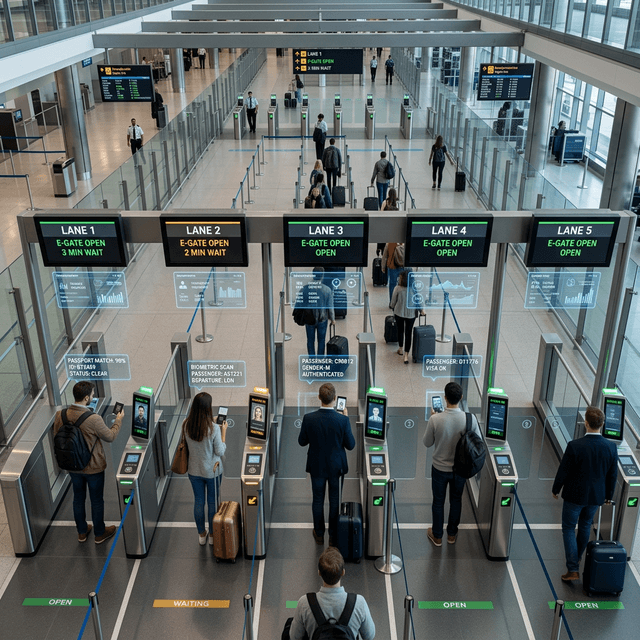
Automated lane and queue operations
Connect lane status, queue signals, passenger or vehicle volume, equipment availability, and facility conditions so operations teams can prepare earlier.
Decision support for flow, facilities, and field execution
Connect lane status, queue signals, facility systems, equipment telemetry, staffing context, and incident workflows into digital twin operations for checkpoints, ports, and high-throughput transport hubs.
Core building blocks that define how this page delivers operational value.
Represent zones, lanes, gates, equipment rooms, queue areas, passenger or vehicle flows, and facility systems in a shared operational view.
FactVerse AI Agent can analyze historical patterns and live signals to help teams compare lane, staffing, and routing options before operational changes are approved.
Connect equipment alarms, facility conditions, queue changes, and work orders so teams can understand whether a slowdown is caused by equipment, environment, process, or staffing constraints.
Use Inspector to manage inspection, repair, evidence, and verification for gates, scanners, kiosks, sensors, HVAC, power, network, and other supporting systems.
Compare predicted demand, lane availability, equipment status, and operating constraints to support human review of staffing and operating plans.
Keep incident handling, maintenance response, approvals, and post-event reviews connected to the relevant zone, asset, and time window.
Practical applications and proven success scenarios across industries.
Connect lane status, queue signals, passenger or vehicle volume, equipment availability, and facility conditions so operations teams can prepare earlier.
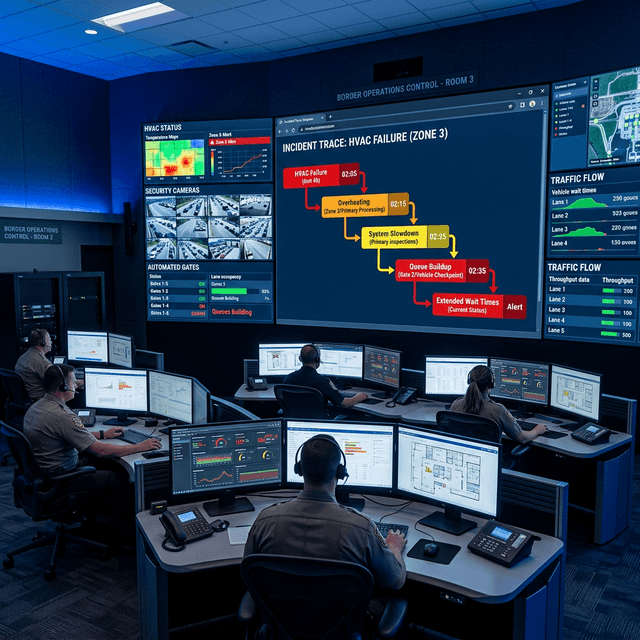
Review whether a queue, heat issue, equipment alarm, network event, or facility condition contributed to the operating problem.
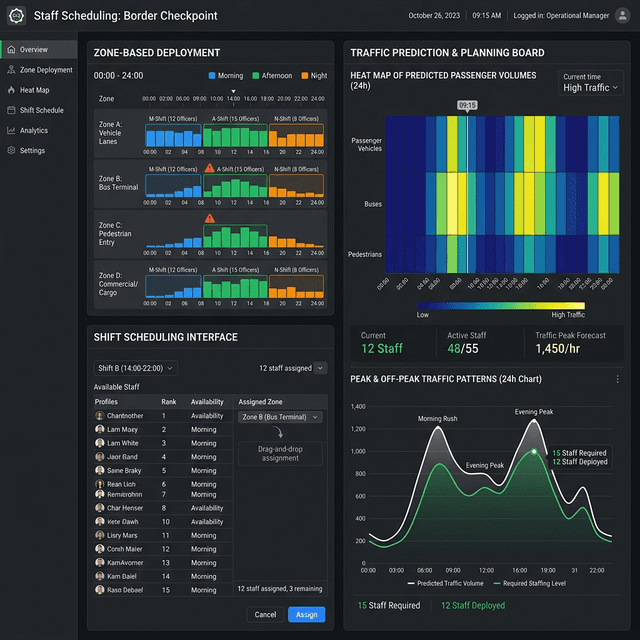
Use demand forecasts and scenario comparison to support human review of staffing, lane allocation, and operating windows.
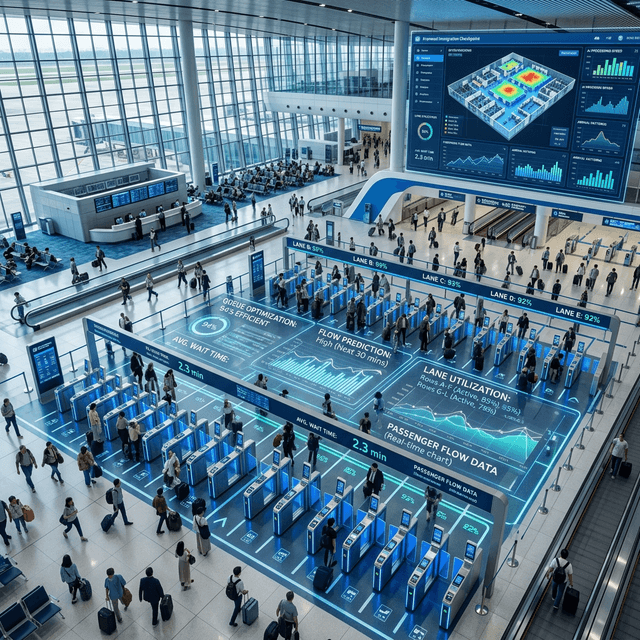
Connect real-time facility signals and maintenance workflows so equipment risk becomes a traceable field action.
Checkpoints, ports, and high-throughput transport hubs run on tightly coordinated physical operations. Lanes, gates, kiosks, sensors, HVAC, power, network systems, staff availability, queue behavior, and facility constraints all affect throughput. When these signals are reviewed in separate systems, teams can see that a problem happened but still struggle to understand why and what to do next.
DataMesh organizes these signals in a digital twin so operations, facility, maintenance, and command teams can review the same zone, asset, queue, incident, and work history. The goal is decision support, not automatic control or identity decision-making.
Data Fusion Services connects operational and facility systems. FactVerse places lane, queue, equipment, and facility context in a spatial view. FactVerse AI Agent helps identify patterns, forecast demand, and compare scenarios. Inspector turns confirmed equipment or facility issues into inspections, work orders, corrective actions, and verification records.
Useful workflows include:
AI Agent should not be described as a system that automatically opens lanes, assigns staff, changes security procedures, or makes immigration, customs, identity, or enforcement decisions. It is an analysis and scenario-support layer. Final operational actions should remain within the customer's governance, approval, and safety process.
When teams need to plan a new layout, compare routing options, or validate a facility-change scenario visually, FactVerse Designer can support virtual planning before Inspector or existing systems carry out the approved action.
See how this product powers real-world use cases.
No. This page describes operational decision support for flow, facilities, equipment, and field execution. It does not replace immigration, customs, security, identity, or adjudication systems.
No. AI Agent helps analyze patterns, predict demand, and compare scenarios. Operational changes should be reviewed and approved through the customer's established command and safety process.
Typical sources include lane status, queue measurements, passenger or vehicle counts, equipment telemetry, facility systems, BMS, maintenance records, incident logs, staffing rosters, and approved operating rules.
FactVerse provides the digital twin context, Data Fusion Services connects systems, FactVerse AI Agent supports analysis and scenario comparison, Inspector manages maintenance and field execution, and Director can support SOP and training workflows.
Start with one checkpoint zone, one equipment family, one recurring queue pattern, or one incident workflow where data already exists but teams need better cross-system context.
Use a focused proof of concept to validate operational value before a wider rollout.